
AI Is Here to Enhance Work, Not Replace It, KAIST Chairman Tells Graduands
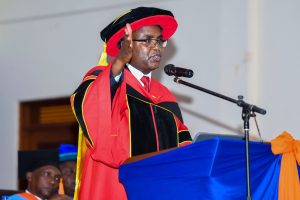
Graduands have been urged to embrace artificial intelligence (AI) as a tool for innovation, efficiency and entrepreneurship, rather than fear it as a threat to employment. The message was delivered by Professor Emanuel Mutisya, Chairman of the Kenya Advanced Institute of Science and Technology (KAIST), who served as chief guest at the joint graduation ceremony for Machakos Institute of Technology (MIT), MIT Teachers Training College (MIT TTC) and the Kenya Institute of Social Work and Community Development (KISWCD).
Held at the Machakos International Convention Centre at Machakos People’s Park, the colourful ceremony celebrated 557 graduands: 384 from MIT, 64 from MIT TTC and 109 from KISWCD. This year’s theme was “Equipped to Innovate and Excel,” reflecting the institutions’ focus on preparing graduates with practical skills and the confidence to respond to a changing world of work.
KAIST Chairman Professor Emanuel Mutisya addresses graduands during the joint graduation ceremony.
Mutisya: AI is an opportunity
Addressing the graduands, Professor Mutisya said AI is already part of everyday life and encouraged graduates to learn how to use it responsibly to improve the quality and efficiency of their work. He challenged them to move beyond the perception that AI will inevitably make people jobless, noting instead its potential to support innovation, improve productivity and open up new opportunities.
He also linked the growth of AI with entrepreneurship, saying technological change could create space for new business ideas and ventures. His message to the graduands was clear: remain adaptable, keep learning and use emerging technologies to solve real problems.
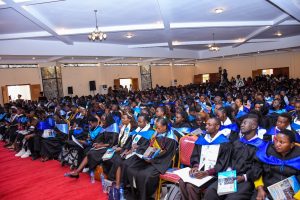
Graduands follow proceedings during the joint graduation ceremony at Machakos People’s Park.
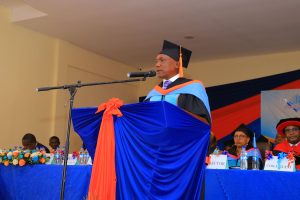
MIT Director Benjamin Mutie addresses guests and graduands during the joint graduation ceremony.
MIT positions skills at the centre of innovation
MIT Director Benjamin Mutie echoed the call to embrace AI, noting that the institution is taking steps to adopt emerging technologies to strengthen creativity and innovation. He underscored the importance of equipping learners with relevant, practical skills that can help them contribute meaningfully in the workplace and identify opportunities for self-employment.
Mutie also appealed to the government to consider extending financial support to students enrolled in privately owned training institutions. He said broader access to student funding would help more learners pursue training and develop the skills needed to contribute to national development.
A celebration of skills and achievement
The joint graduation brought together graduands, families, trainers, institutional leaders and guests to celebrate the completion of training across the three institutions. The 557 graduands represent a significant milestone for the institutions and the learners preparing to take their next steps into employment, further learning and enterprise.
As they enter a world increasingly shaped by digital tools and new technologies, the message from the ceremony was that technical competence must go hand in hand with creativity, adaptability and a willingness to keep learning. The theme, “Equipped to Innovate and Excel,” captured that call to turn knowledge and skills into practical solutions.

Graduands at the ceremony, celebrating the achievement of completing their programmes.
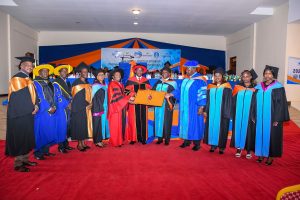
Institutional representatives, BOG and Chief Guest pose during the joint graduation celebration.